
The Ultimate Guide to Clinical Trial Participation: Everything You Need to Know Before Enrolling



If you’ve recently received a new diagnosis or watched a loved one battle a condition, you’ve probably considered whether a better treatment option is available. You may have heard about clinical trials — research studies that test new treatments and therapies — but you might not be sure what they involve or whether participating is right for you.
Whether you’re searching for hope, new options, or a way to give back, clinical trial participation is a path many people consider at some point in their lives. However, at first glance, it can seem confusing or even intimidating. This clinical trial guide will demystify the process, from understanding the science to knowing your rights, so you can make an informed decision.
In This Article
- What Are Clinical Trials and Why Are They Important?
- Clinical Trial Information: The 4 Phases Explained
- Top Reasons to Consider Participating in Clinical Trials
- A Balanced View: The Risks and Benefits of Joining a Clinical Trial
- Are You Eligible? Clinical Trial Eligibility Criteria Explained
- More About the Informed Consent Process in Clinical Research
- The Role of Placebos in Clinical Research
- How Much Do You Get Paid for Clinical Trials?
- How to Find Paid Clinical Trials Near You
- Questions to Ask Your Doctor and Research Team Before Enrolling
What Are Clinical Trials and Why Are They Important?
Clinical trials are research trials involving people that help find new or better ways to prevent, diagnose, or treat disease. This research allows doctors and researchers to learn more about a disease to improve care for future patients. Clinical trials are a specific type of clinical research that evaluates the effects of an intervention on health outcomes.
The core purpose of a clinical trial is to determine whether a new drug, device, or treatment is safe and effective for humans. Clinical trials may study a new drug or combination of drugs, new medical devices, new surgery methods, or new ways to use existing treatments.
Clinical trials are essential for advancing medicine and providing future generations with better healthcare options. They are the foundation of evidence-based medicine and allow providers to ensure new treatment options are effective and do not cause harm. Clinical trials can help identify potential risks or side effects and shape clinical guidelines and standards of care.
Clinical Trial Information: The 4 Phases Explained
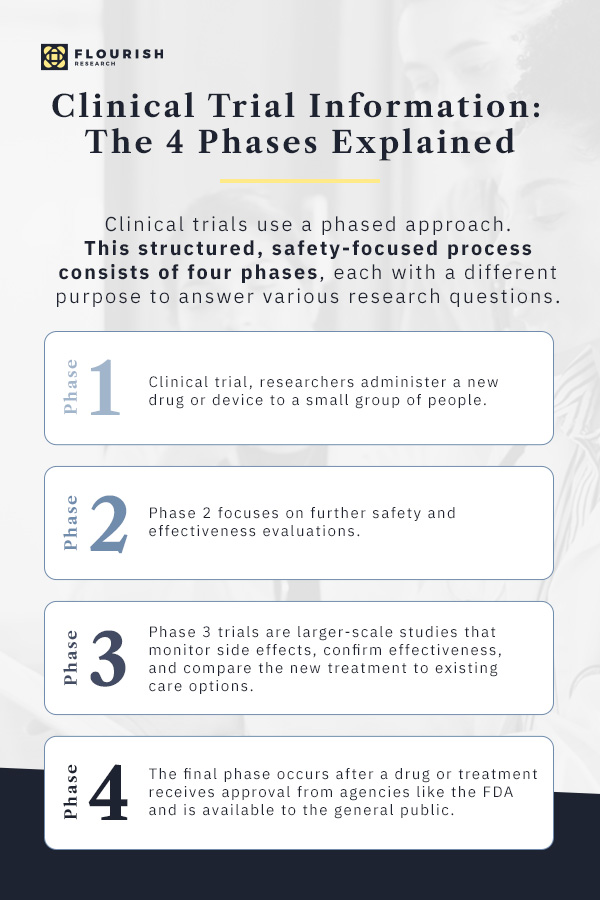
Clinical trials use a phased approach. This structured, safety-focused process consists of four phases, each with a different purpose to answer various research questions.
Phase 1 trials involve administering a drug or device to a small group to test its safety. In the second phase, researchers gauge whether the treatment is effective. Phase 3 compares the new treatment to current care standards. The final phase consists of surveillance after the product is available on the market to determine long-term risks and benefits.
Phase 1: Is It Safe to Participate in a Clinical Trial?
In a Phase 1 clinical trial, researchers administer a new drug or device to a small group of people, generally between 20 and 80 healthy volunteers. In some cases, the study might include current patients with the targeted disease, such as cancer.
This phase focuses on treatment safety, dosage range, and possible side effects. Researchers closely monitor participants for adverse reactions and analyze how the body processes the drug. Patients often undergo dose escalation to inform researchers of the maximum tolerated dose without serious side effects.
This phase is not focused on effectiveness. Instead, Phase 1 offers early insights into how a treatment option may work. The data from this phase is crucial for designing the following phases because it allows researchers to identify any immediate risks and establishes a foundation for safe dosage.
Phase 2: How Do Clinical Trials Work for Patients?
Phase 2 focuses on further safety and effectiveness evaluations and helps determine whether a treatment is promising enough to warrant more definitive studies. In this phase, 100 to 300 volunteers or patients will receive the new treatment. The main objective is to assess short-term risks and effects and determine whether the treatment has the intended effect.
At this point, researchers aim to refine dosing regimens based on Phase 1 results. If the new treatment shows significant benefits and manageable risks, it will move to the next phase. Treatments with severe side effects or insufficient efficacy do not move on.
Phase 3: Is It Better Than Standard Treatments or Placebos?
Phase 3 trials are larger-scale studies that monitor side effects, confirm effectiveness, and compare the new treatment to existing care options. These trials typically involve between 1,000 and 3,000 people across multiple sites and ensure diverse population representation.
Generally, these trials are randomized and controlled to provide the highest level of evidence. A trial may consist of standard care, placebo treatment, and new treatment groups. In double-blind trials, neither the researchers nor the participants know who receives which treatment. This method removes bias in reporting and assessing outcomes.
The results from Phase 3 are critical for regulatory approval. Agencies like the Food and Drug Administration (FDA) require robust evidence from trials before allowing a new drug or device on the market. These trials are often time-consuming but are essential for ensuring safe and widespread treatment use.
Phase 4: What Else Do We Need to Know?
The final phase occurs after a drug or treatment receives approval from agencies like the FDA and is available to the general public. This stage aims to monitor long-term risks and benefits and determine optimal treatment use.
Phase 4 trials involve thousands of patients across diverse populations. This phase can help researchers identify rare or long-term side effects that may not have appeared in earlier phases due to shorter follow-up periods or smaller sample sizes. This phase also allows researchers to gain valuable information about how the treatment performs in different patient groups and alongside other medications.
Findings in Phase 4 can lead to changes regarding treatment usage, warnings, or market availability. Overall, this final stage ensures ongoing patient safety and promotes optimal use of new therapies.
Top Reasons to Consider Participating in Clinical Trials
Participating in a clinical trial can be a significant decision. Trial participation can potentially deliver personal and societal benefits, allowing you to find possibly improved treatments for yourself or contribute to medical advancements.
Clinical trials allow you to:
- Potentially Gain access to innovative new treatments before they are widely available: Unfortunately, many conditions leverage ineffective standard therapies. For example, various types of cancer, HIV and AIDS, and some neurological diseases lack effective and consistent treatment options. If you have one of these conditions or have faced ineffective treatment for another condition, a clinical trial could be a promising avenue. These trials allow you to access cutting-edge options otherwise unavailable to the public.
- Receive expert medical care and regular health monitoring at a leading research facility: Clinical trials require close monitoring and care from specialists and experts at leading healthcare and research facilities. The additional oversight from a research team can be immensely beneficial, providing a comprehensive evaluation and management of your health.
- Help others and contribute to medical advancements: You can play a direct role in the development of new treatments by participating in a clinical trial. This benefit is a strong motivator for those who wish to contribute to the greater good and improve healthcare for future generations.
- Play a more active role in your own healthcare: Trial participation transforms your role from passive patient into active partner. You may learn more about your condition, make informed choices regarding treatment, and remain up to date on your progress. Trial participants work closely with care and research teams, allowing you to foster a collaborative relationship and discuss your care in depth.
A Balanced View: The Risks and Benefits of Joining a Clinical Trial
Like many advancements, clinical trials come with benefits and drawbacks. Benefits include:
- Accessing new, cutting-edge treatments
- Receiving expert care
- Contributing to science and medical advancements
- Potential for compensation for time and travel
- Contributing to your treatment plan
Despite the immense opportunities of participating in a clinical trial, they are not without some risk. It’s important to understand these risks before enrolling. Always discuss potential risks with the research team conducting the trial and your healthcare provider and weigh them against the benefits to determine if a trial is right for you.
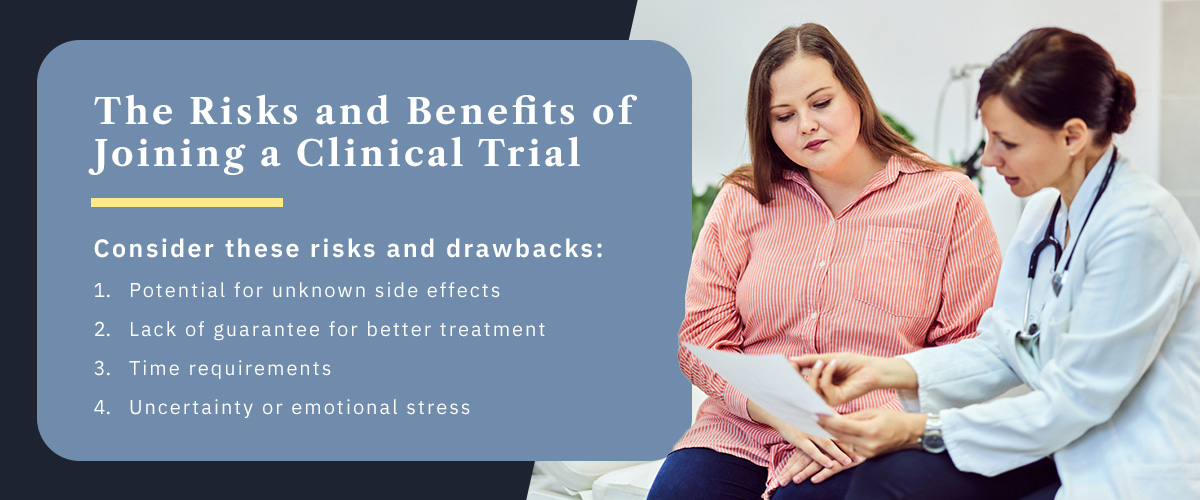
Consider these risks and drawbacks:
- Potential for unknown side effects: The most significant risk of clinical trials is the potential for unknown side effects. Because new treatments are still being studied, they may cause unexpected or more severe side effects than standard therapies.
- Lack of guarantee for better treatment: Treatments may not work as you or your research team hoped. A new drug or device may be less effective than existing treatments. Alternatively, you could be randomly placed in a placebo group, meaning you may not have access to the new treatment during your trial participation.
- Time requirements: Clinical trials often require more doctor visits, scans, blood tests, or other procedures. While these tests are critical for evaluating your body’s response and the treatment’s effectiveness, they can be time-consuming or uncomfortable.
- Uncertainty or emotional stress: New treatments can have long-term effects that researchers did not anticipate during the early trial phases. The uncertainty of possible long-term effects could cause emotional stress during and after your participation.
Are You Eligible? Clinical Trial Eligibility Criteria Explained
Inclusion and exclusion criteria refer to a set of parameters a research team defines to select appropriate participants for a study. These criteria are crucial for ensuring participant safety and data integrity. While specific inclusion criteria will vary from one trial to another, they generally include elements like:
- Age
- Gender
- Disease type
- Stage of disease
- Overall health status
- Treatment history
Alternatively, exclusion criteria are characteristics that prevent someone from joining a clinical trial. Some conditions or medications could interact poorly with a new treatment, threatening participant safety. Additionally, some aspects could impact the study’s scientific integrity, making results inaccurate. Common exclusion characteristics include:
- Conflicting health conditions
- Taking certain medications
- Prior trial participation
- Substance use
- Pregnancy or breastfeeding
In some cases, special considerations are taken into account. For example, participants must be able to commit to the study duration and attend regular checkups and visits. For these reasons, participants may need to reside in a certain geographical area and have scheduling flexibility.
More About the Informed Consent Process in Clinical Research
Another essential aspect of becoming a trial participant is informed consent. Informed consent is more than just a signature on a document — it’s an ongoing conversation and process. Trial participants must fully understand the study they are considering joining, including its purpose, benefits, procedures, and risks. Researchers have an ethical and legal obligation to ensure participants understand this information and can exercise their rights appropriately.
Every clinical trial requires a written document providing comprehensive study information. This document will outline the study’s purpose and procedures, so participants can understand what will happen and how long the treatment will last. It will also discuss potential risks and potential benefits to the participant or future patients.
Informed consent documents also outline how a team will use and protect your personal and medical information. If your trial involves compensation, you can expect to learn about any incurred costs and your payments.
Remember that trial participation must be voluntary, but you can withdraw from a study at any time for any reason without penalty. Additionally, if new findings could affect your willingness to continue a study, the research team must inform you promptly. If you have any questions throughout the study, your research team will be available to answer them, creating a collaborative experience.
The Role of Placebos in Clinical Research
A placebo is an inactive substance or treatment that looks the same as an active treatment. These substances allow research teams to create control groups to measure the true effect of an investigational treatment. In some trials, placebos also help to eliminate bias. For example, in double-blind studies, neither party knows which participants receive the placebo, preventing any expectations from influencing the results.
Many times, a placebo is compared to a new treatment in addition to existing treatments. However, not all trials use placebos. Trials that will use placebo substances must inform participants during the consent process.
How Much Do You Get Paid for Clinical Trials?
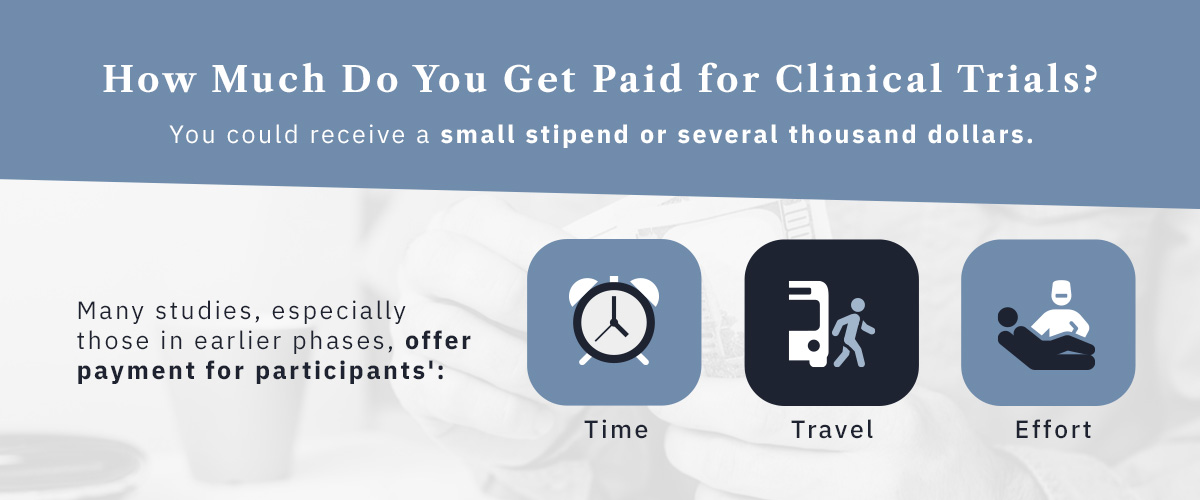
Many studies, especially those in earlier phases, offer payment for participants’ time, travel, and effort. Researchers understand that clinical trials can require a lengthy time commitment. Some studies require only a few outpatient visits, while others may need longer inpatient stays. Depending on your involvement and the study requirements, you could receive a small stipend or several thousand dollars.
One study suggests that the median clinical trial compensation in the United States is just over $3,070. However, these numbers can vary greatly. Generally, a study’s length, procedures, and required commitments will impact the total compensation. Some teams may also offer to reimburse the cost of meals, lodging, or travel in addition to direct payments. Either way, the research team will always provide this information up front and transparently.
How to Find Paid Clinical Trials Near You
If you’re interested in participating in a clinical trial, you can rely on trusted sources to point you in the right direction. First, you should speak with your healthcare provider. Your provider can offer recommendations based on your previous treatment history, overall health, and any concerns you wish to address. They may also have insight into local trials or ground-breaking possibilities for specific conditions.
Databases like ClinicalTrials.gov empower you to search for trials by parameters, such as condition, treatment, or location. You can also visit local hospitals, clinics, and research platforms to learn more about upcoming studies.
If you’re looking for a study in your area, explore opportunities directly with trusted research organizations like Flourish Research. We conduct a wide range of studies across multiple locations, making it easy to see what’s available and enroll in active studies.
Questions to Ask Your Doctor and Research Team Before Enrolling
Open communication is a crucial element of enrolling in a clinical trial. Never hesitate to ask for clarification or more details on any part of the process. Your team is there to help you and address any concerns while maintaining your comfort and safety as a top priority.
Use these questions as a comprehensive checklist with your research team or doctor before enrolling:
- How will I be informed about the study results?
- What is the purpose of this study?
- What will I be asked to do, and how much time will it take?
- Why do researchers believe this treatment will work?
- How often will I need to visit the clinic or hospital?
- What are the possible risks and benefits?
- Will I be compensated for my time and travel?
- How is my safety being monitored?
- What happens if I experience side effects or complications?
- Can I continue taking my current medications?
- Can I continue seeing my regular doctor?
- What happens if I want to leave the study?
- Who can I contact if I have questions during the trial?
Explore Available Clinical Trial Opportunities
Participating in a clinical trial is a significant decision that can potentially offer personal benefits and empower you to contribute to the health of future generations. Explore your options, talk to your doctor, and reach out to research centers like Flourish with any questions. With the right information, you can choose what feels best for you.
Flourish Research supports the advancement of life-changing treatments. We strive to give each participant the best study experience possible and will always keep you informed from start to finish. Considering becoming a participant? Get in touch with our team to learn more.